JALL · clocks for the bedroom, the wall and the nightstand
JALL makes the clock that wakes you with light, and the one you can read from across the room.
We design quiet, straightforward clocks for your bedroom, office, and living spaces. The JALL collection includes sunrise alarms that brighten gradually, clear calendar clocks, and large wall displays. Each one is built for simple daily utility, giving you the time exactly when you need it, without phone apps or Wi-Fi setup.
We build clocks to help you rest and wake without friction. Every model we make follows four basic rules. These standards keep your bedroom quiet, dark, and easy to manage from the moment you set the time.
01
Wake with light
Our sunrise clocks brighten gradually for 10 to 60 minutes before any sound plays. For our other models, a clear display is always the priority. You see the time before a buzzer ever speaks.
02
True dark bedrooms
Every screen we design dims, so the room can stay as dark as you like. The sunrise and wooden bedside models can turn off completely or auto-dim by the time of day. You control the light in your room.
03
Clear from distance
We size our digits for real use. Read our wall clocks from across the living room, check a bedside clock from your pillow, or view a calendar day clock clearly from the doorway.
04
Simple independent setup
Adjust everything with physical buttons. A memory backup keeps your settings during a power cut. There are no accounts to create and nothing to pair, unless you choose a model with a Bluetooth speaker.
Sunrise alarm clocks
Wake to light, then to sound
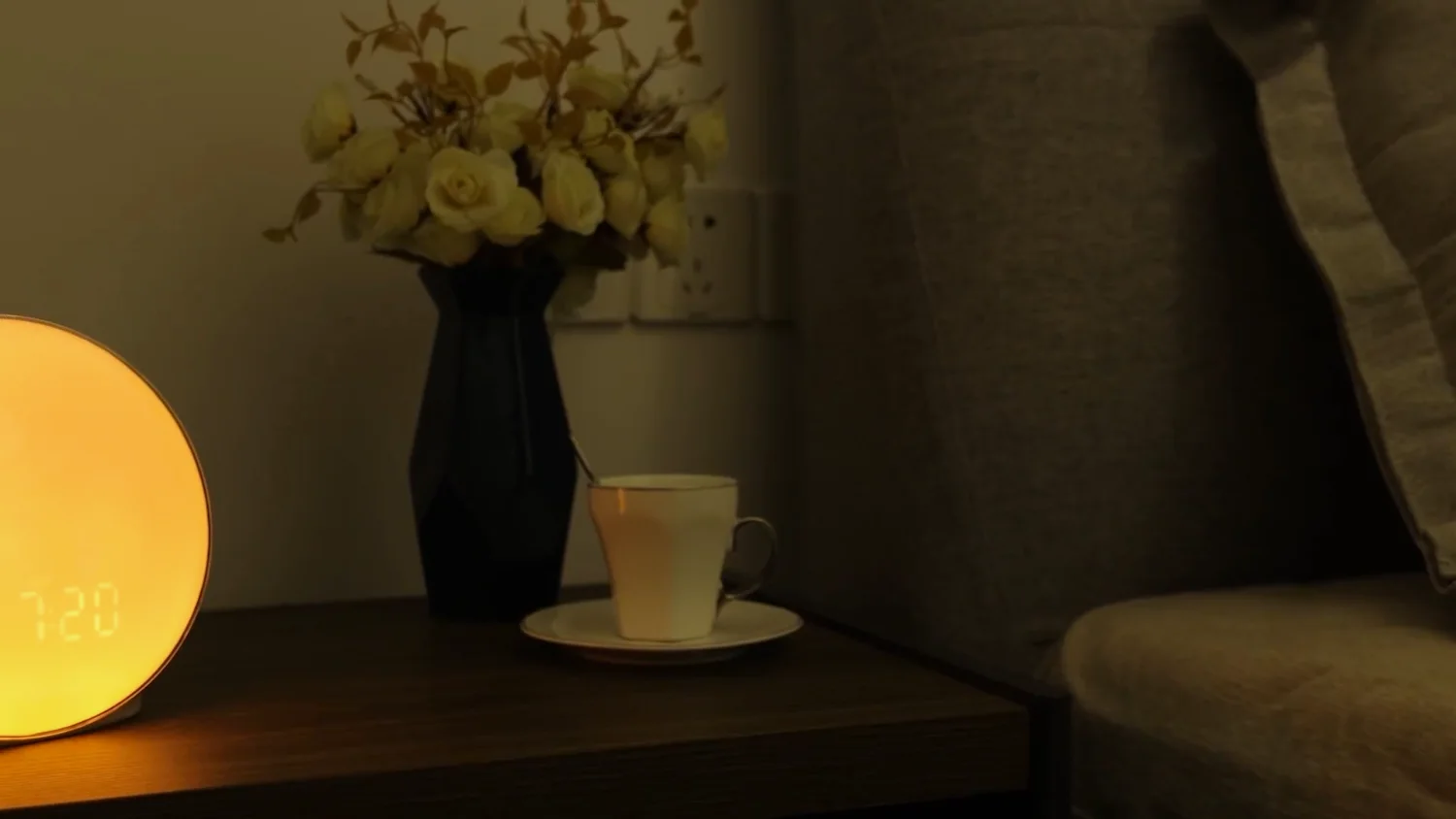
Standard alarms startle you out of sleep in a dark room. Light-first waking is different. A quiet glow begins at your bedside, slowly brightening over 10 to 60 minutes. By the time the alarm sounds, your eyes have adjusted to a lit room. You wake up to a simulated dawn rather than a sudden noise.
We design these clocks to keep your bedroom dark until morning. The display dims all the way to off. At night, you can drift off to 25 sleep sounds with a sleep timer from 10 to 480 minutes. There are no apps to install and no Wi-Fi to configure. Even during a power cut, your settings survive.
30 min beforethe screen begins to glow, deep amber
15 min beforethe room is visibly light; the colour lifts to warm white
Alarmfull brightness, then the sound you chose, quietly at first
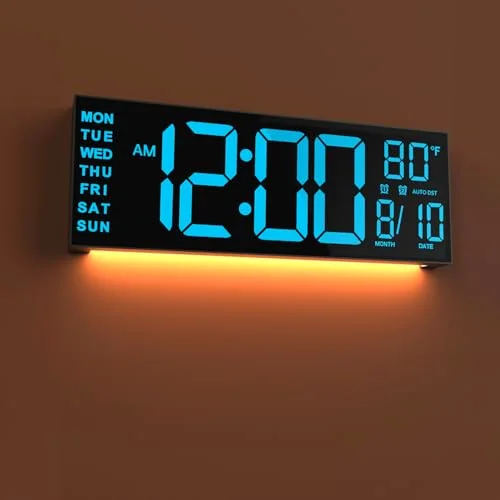
From eight inches for a hallway to thirty for a gym or a classroom. Auto-dimming on every model, remote control on most, and the date and temperature under the time.
These clocks belong on gym walls, in busy kitchens, in classrooms, or opposite your favorite reading chair. The first thing to decide is your viewing distance. We make displays from 8 to 30 inches wide.
Most models include a remote control, automatic daylight saving adjustments, and a display for the date and room temperature. The screens dim automatically when the room gets dark, or you can set the brightness yourself. Some sync their time over Bluetooth. If you prefer to avoid power cords, our battery-powered model runs up to 14 months on four AA batteries.
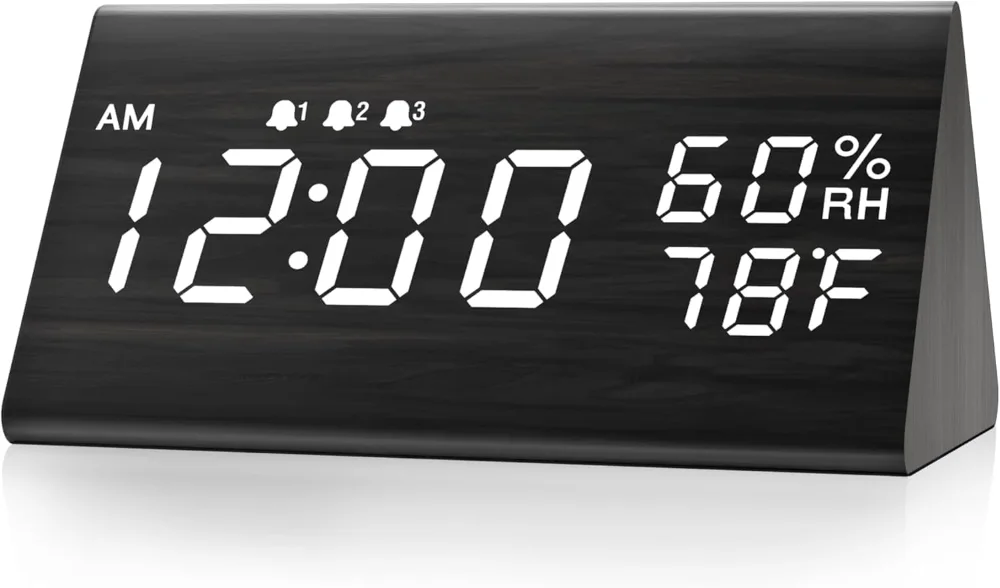
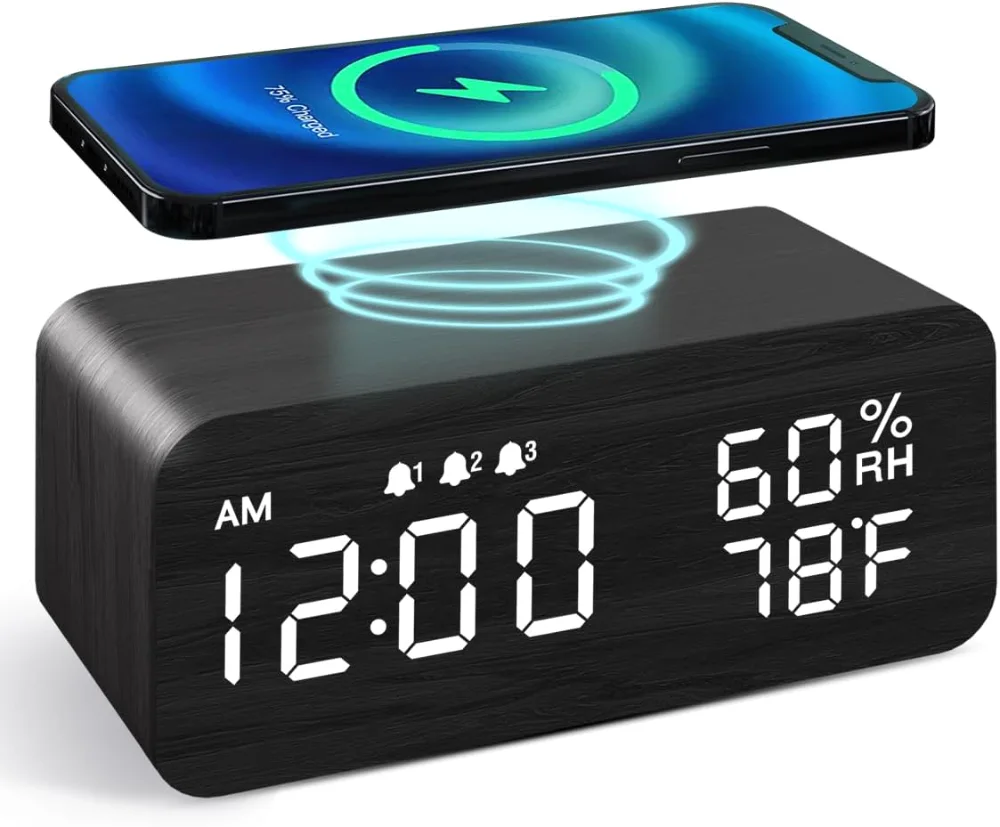
Wood-grain cases with digits that show through the surface, a mirror-front slim model, and one with FM radio and a night light. Some charge a phone laid on top.
Phones do many things, but a dedicated bedside clock does only one. It stays where you put it, does not send notifications, and does not glow unless you want it to. It lets your nightstand be a place for rest.
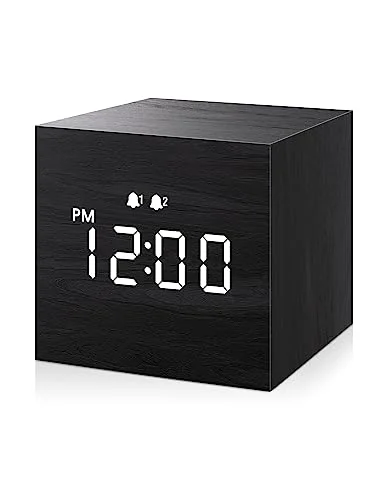
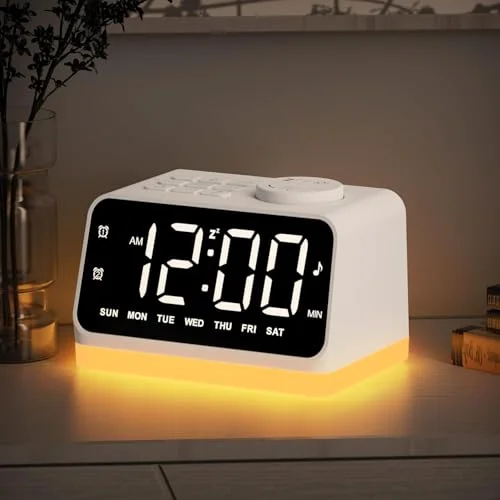
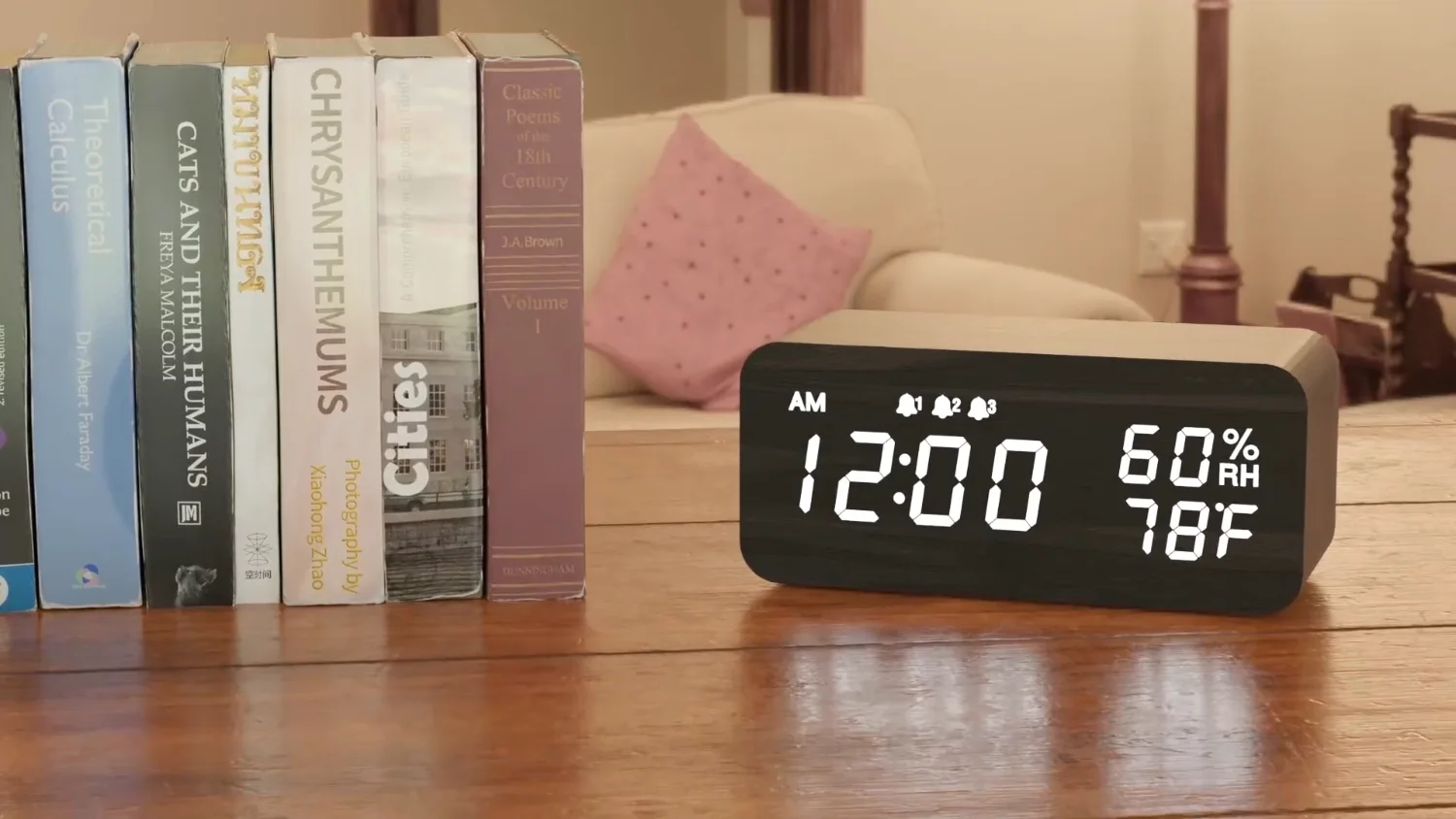
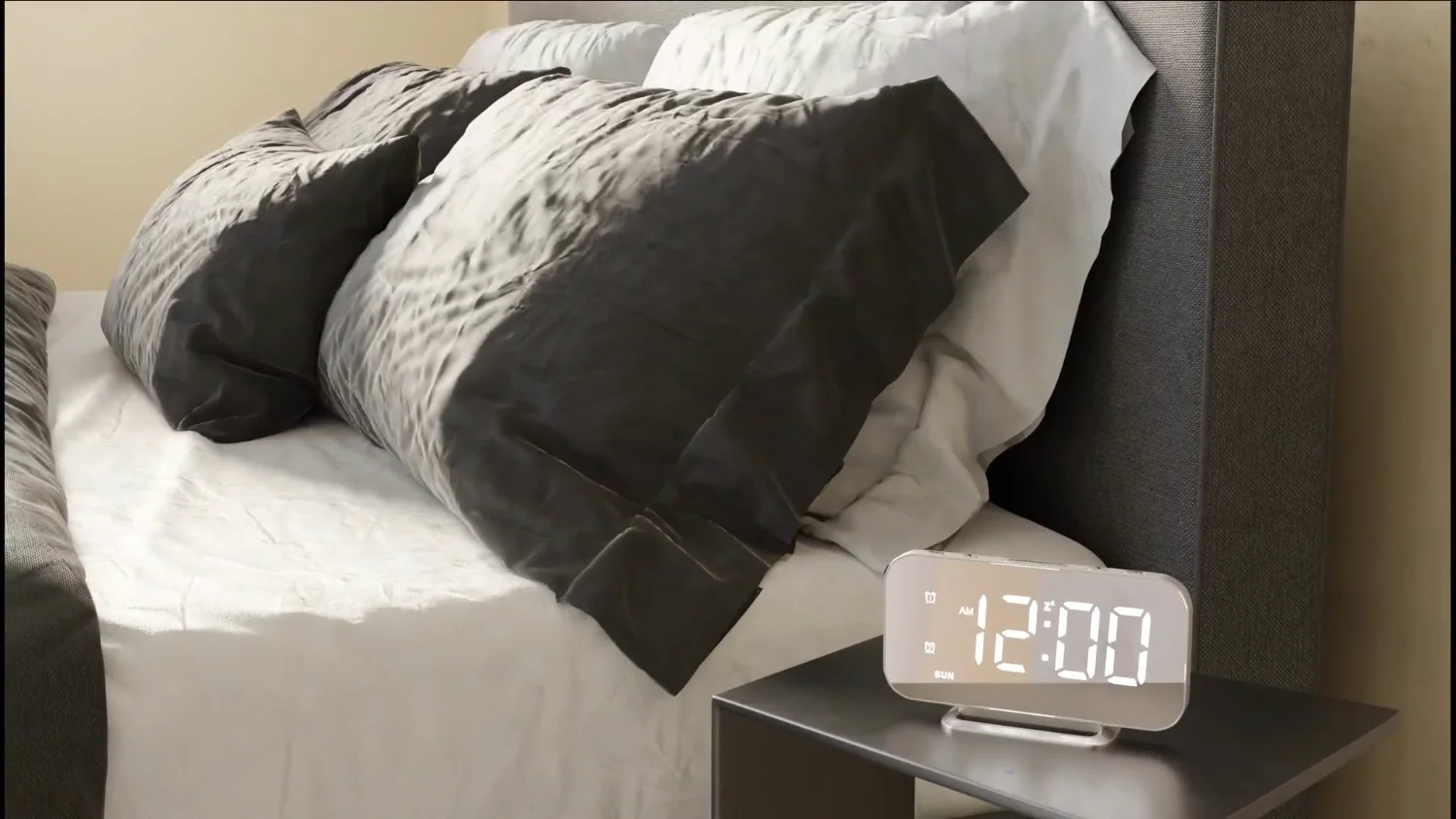
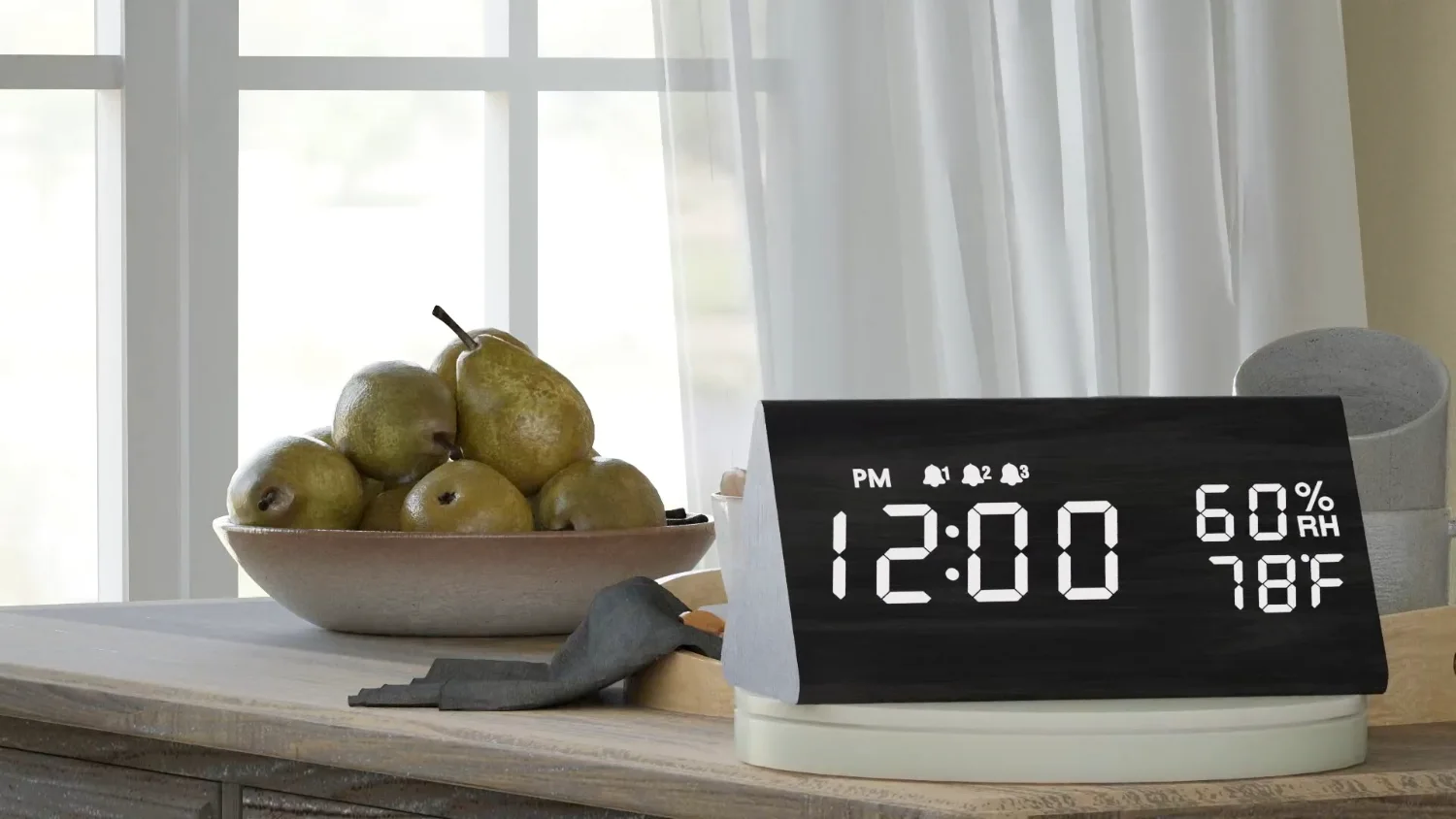
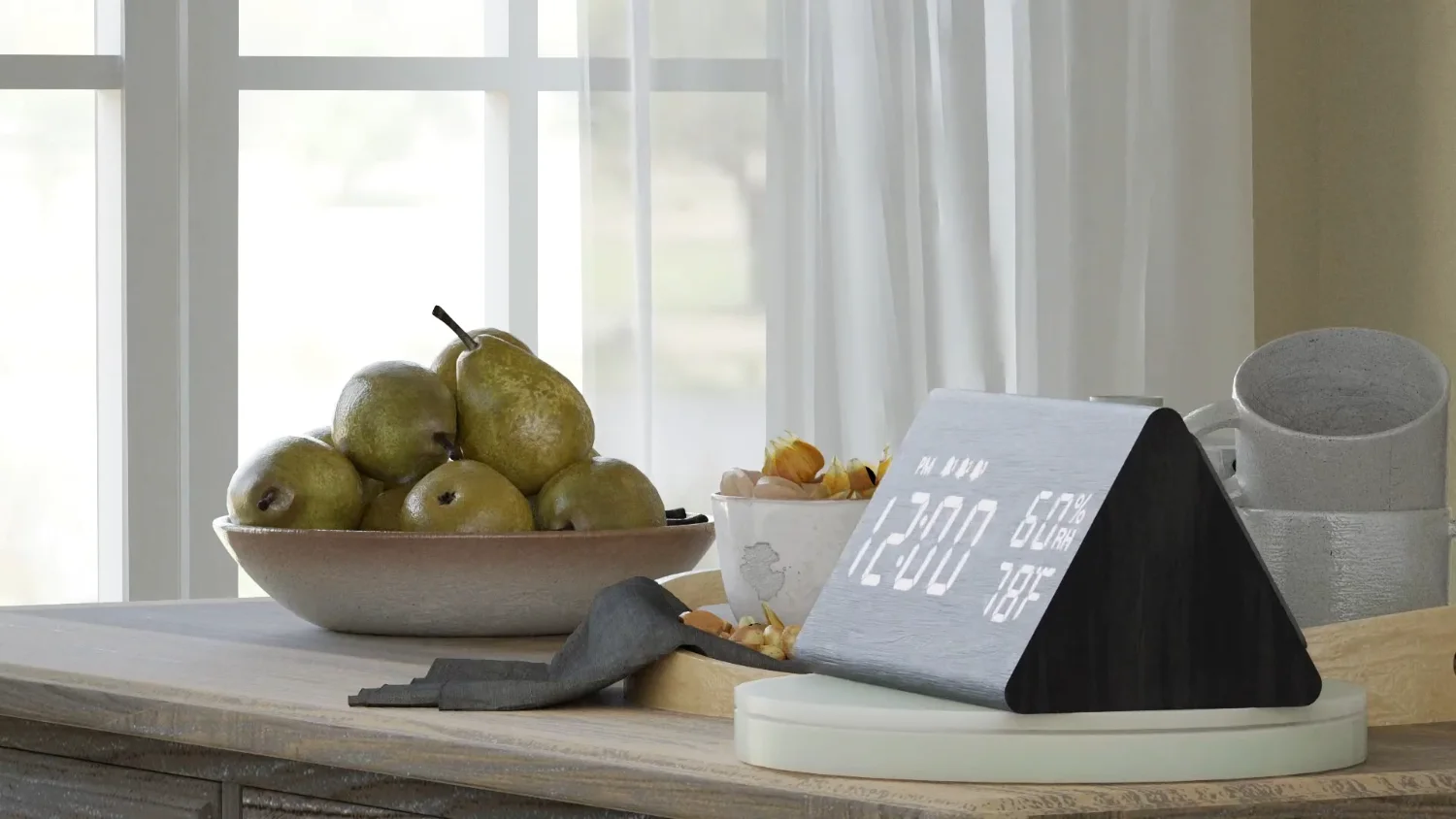
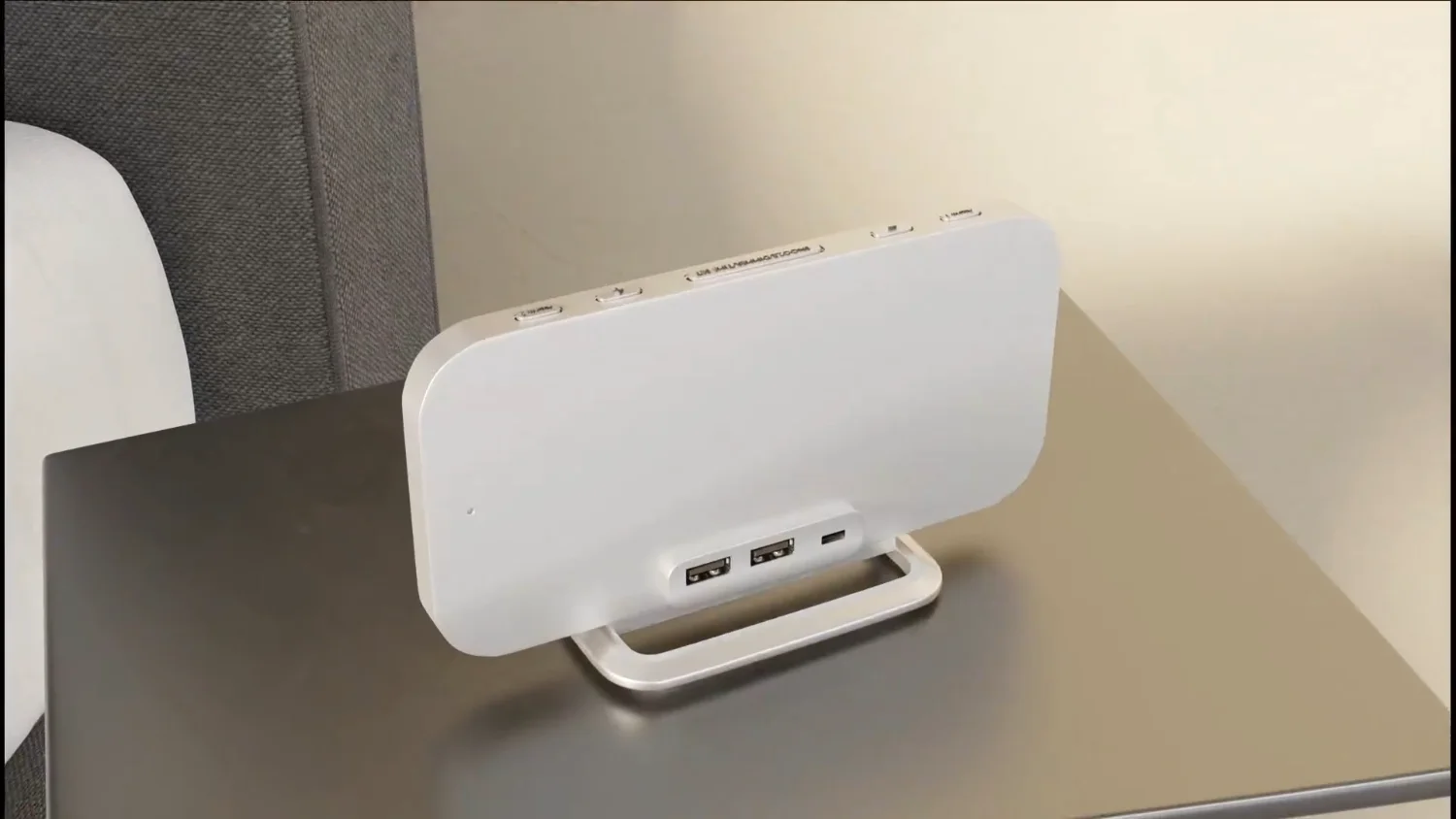
Our bedside collection includes wooden models with digits that show through the wood-grain surface, featuring three alarms and auto-dimming by time of day. Some models add wireless charging on top. Others feature a mirror face or an FM radio with white noise options and an eight-color night light. They keep your morning simple.
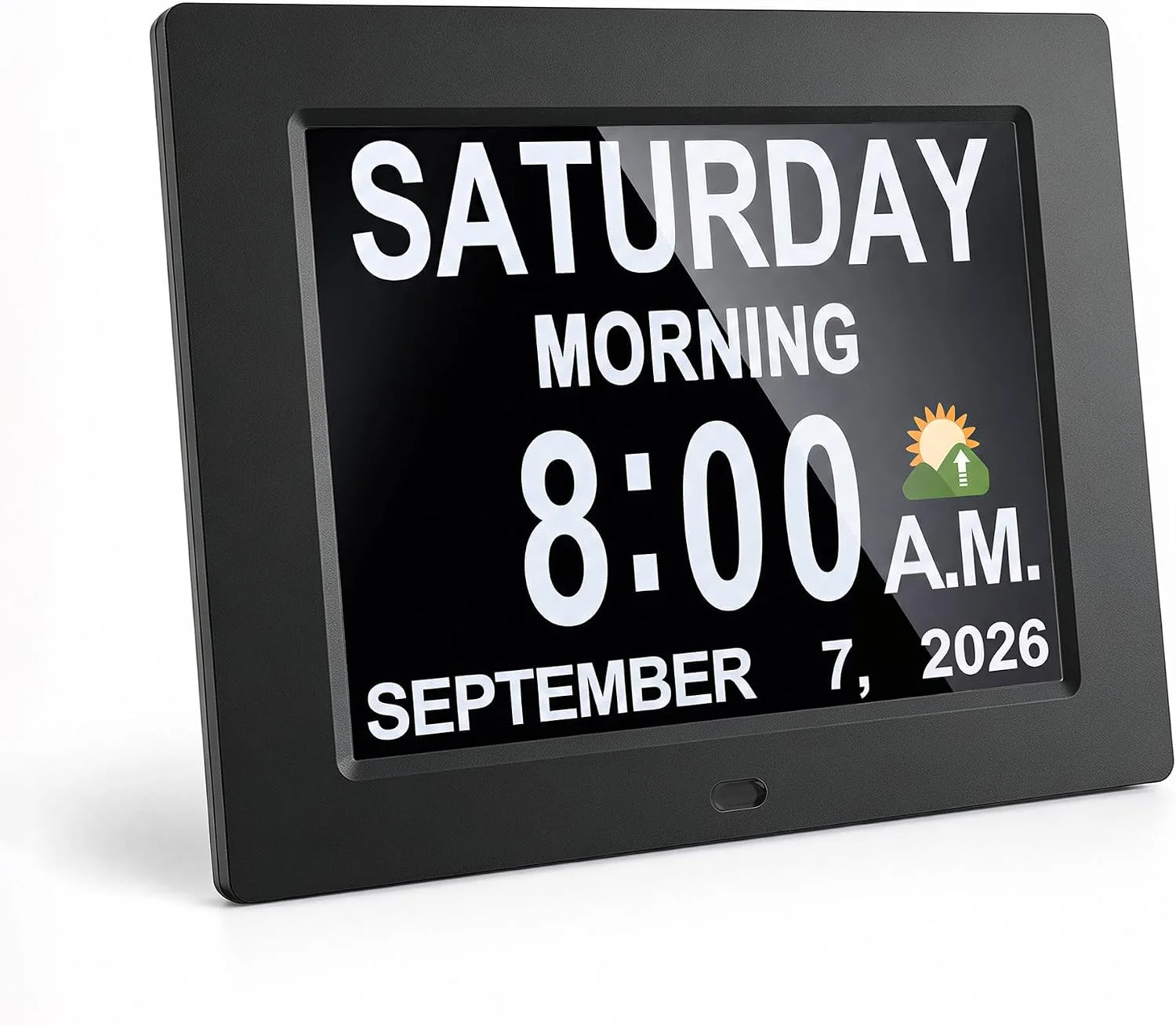
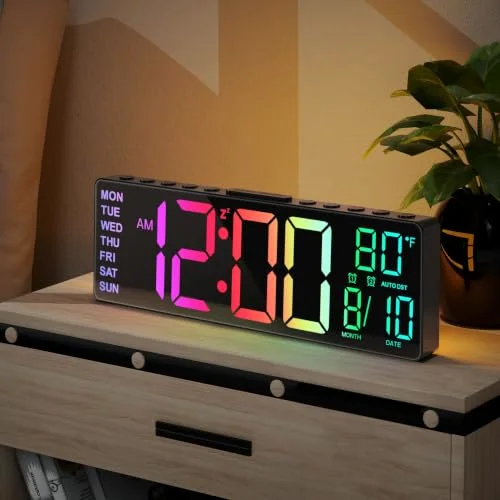
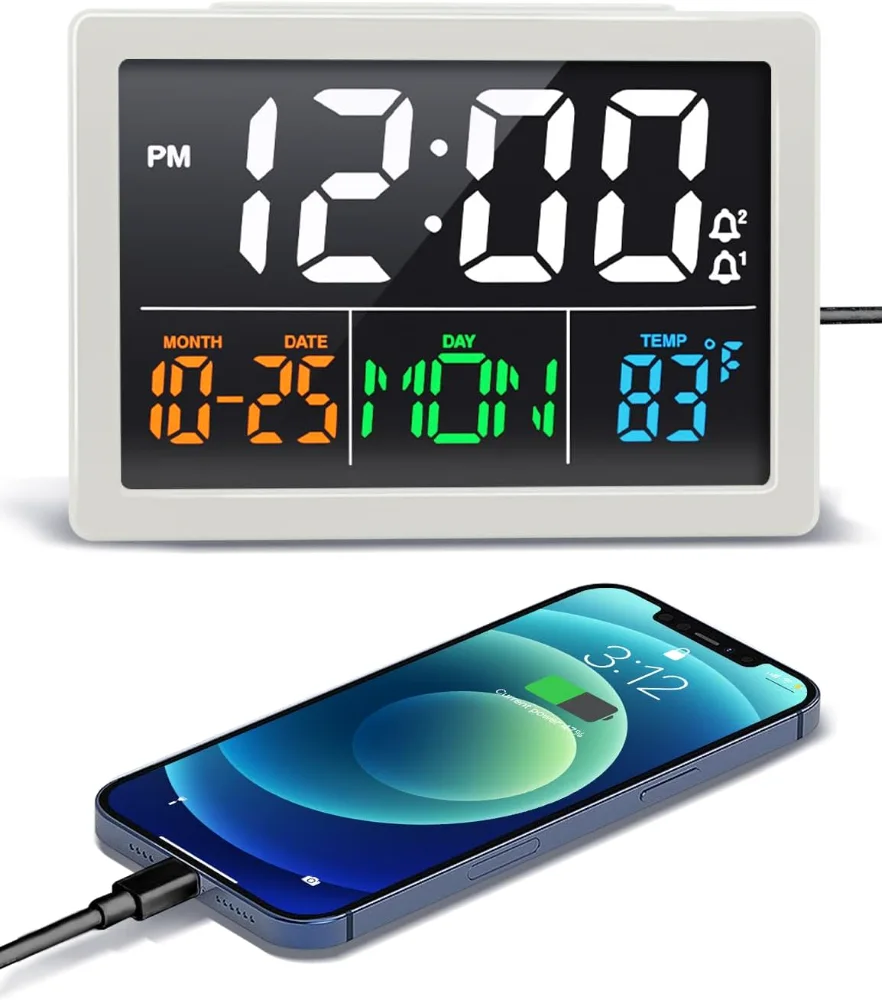
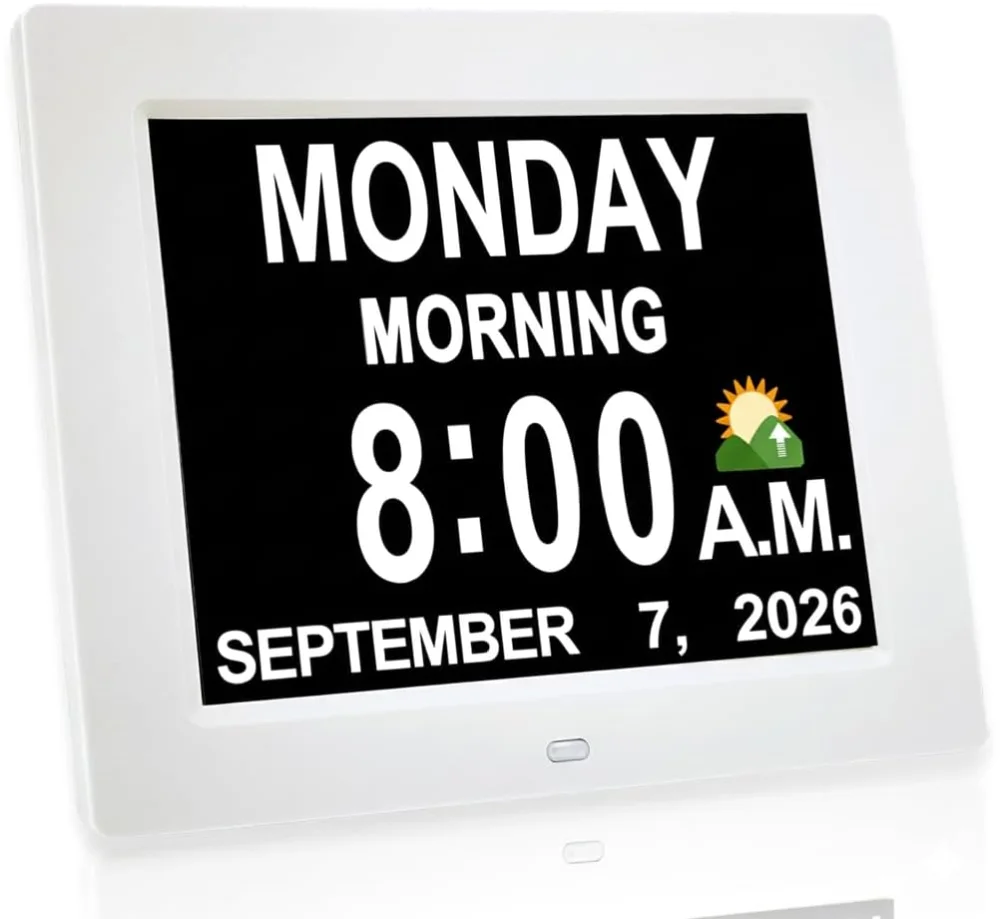
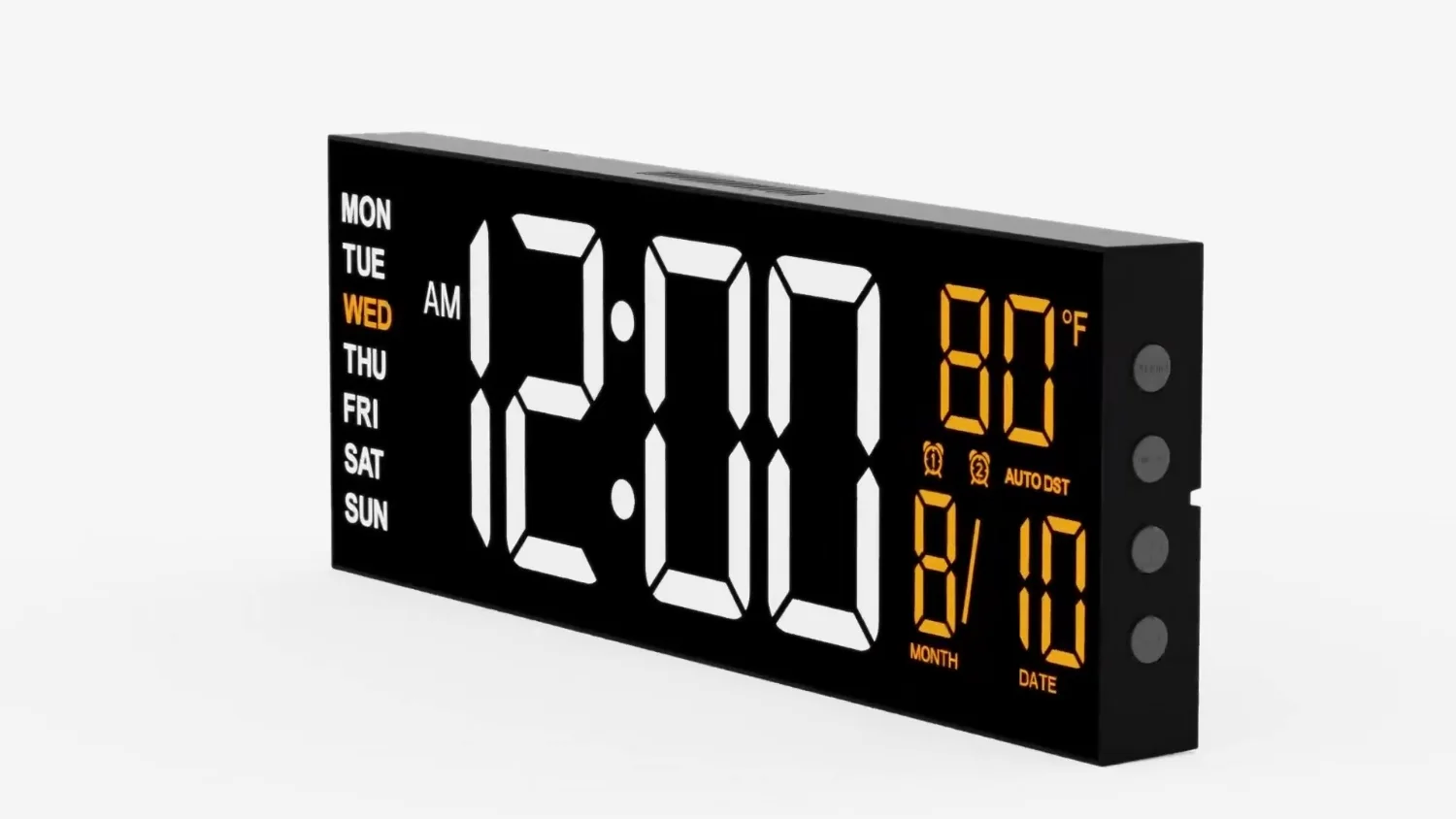
A quick glance should answer the question of what day it is. These calendar clocks show the day of the week and the month spelled out in full, using large letters with no abbreviations. You can choose from screen sizes of 7, 8, 10, or 12 inches to fit any room.
For daily routines, you can set up to 12 alarms and optional hourly reminders for medications or appointments. If the power goes out, the clock keeps its settings so you do not have to reprogram it. We also offer a smaller bedside model that shows the day, date, and indoor temperature.
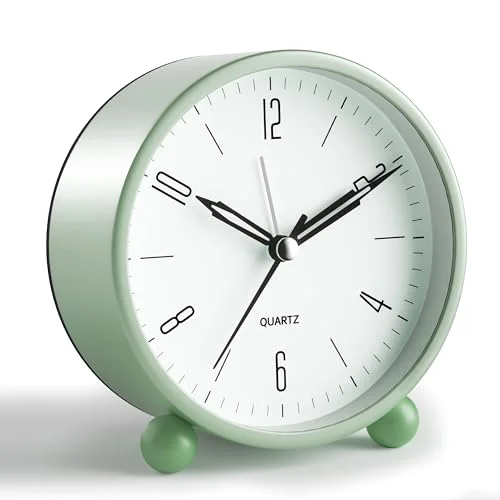
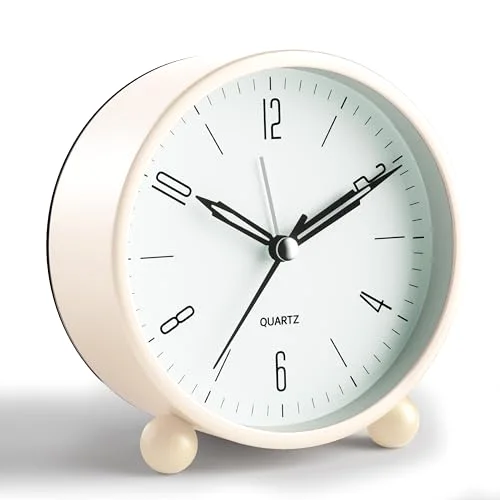
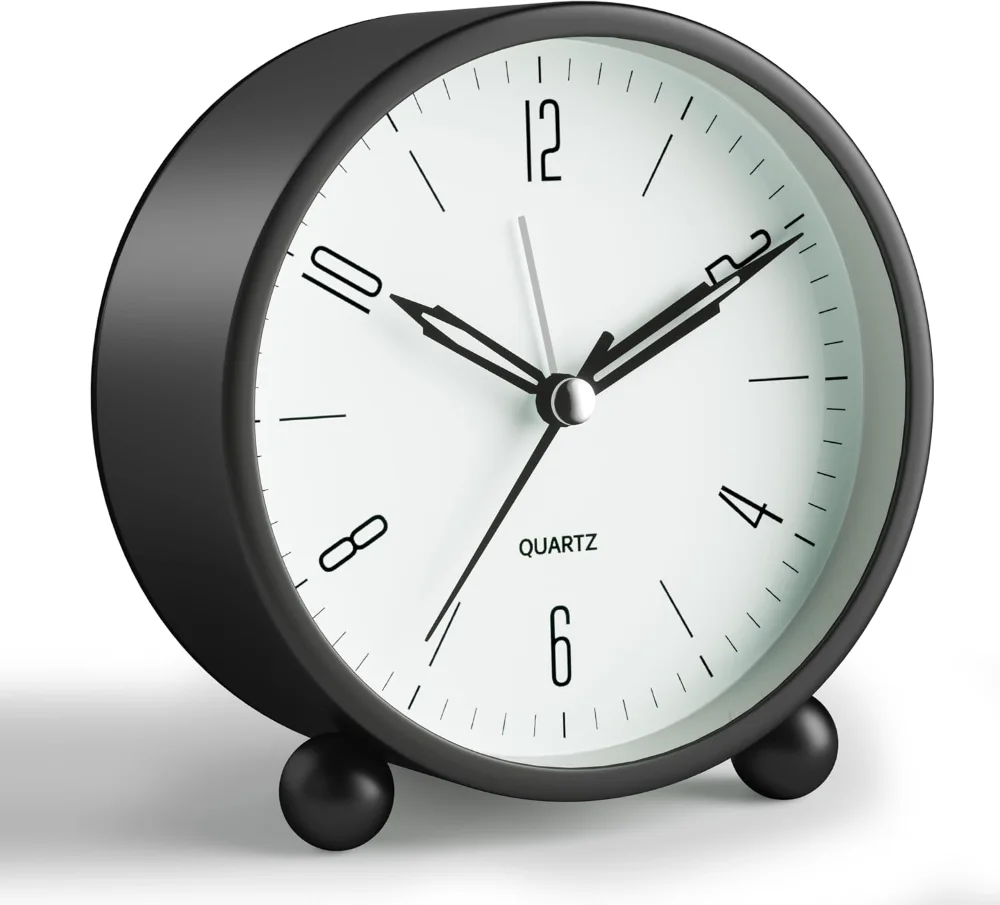
This four-inch clock is built for quiet spaces. The sweep second hand moves without a tick, keeping your bedroom silent. It runs on a single AA battery, so you never need an outlet. It fits easily on a narrow nightstand or inside a suitcase for travel. Press the top button for a brief night light. Available in eight colors.
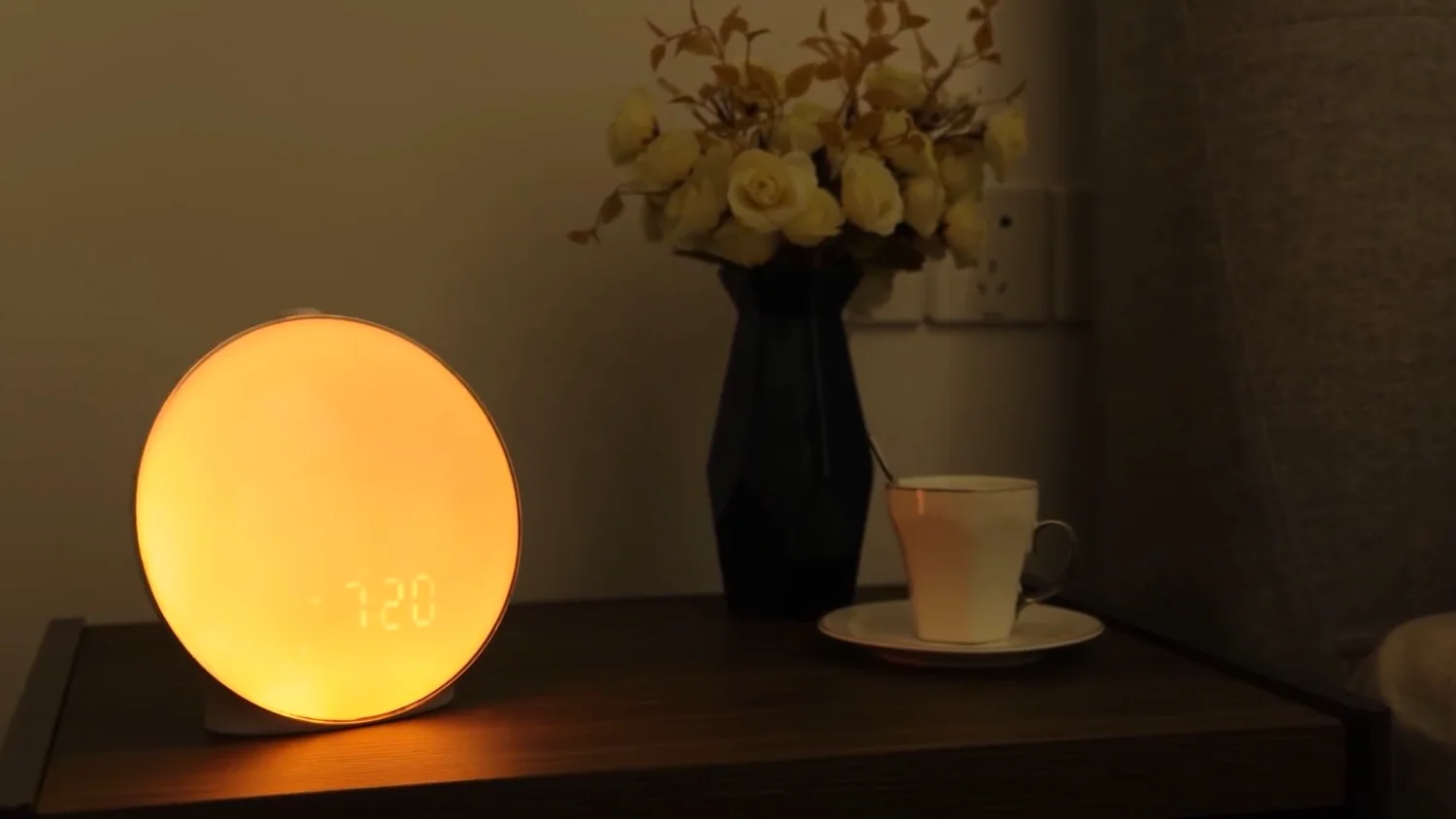
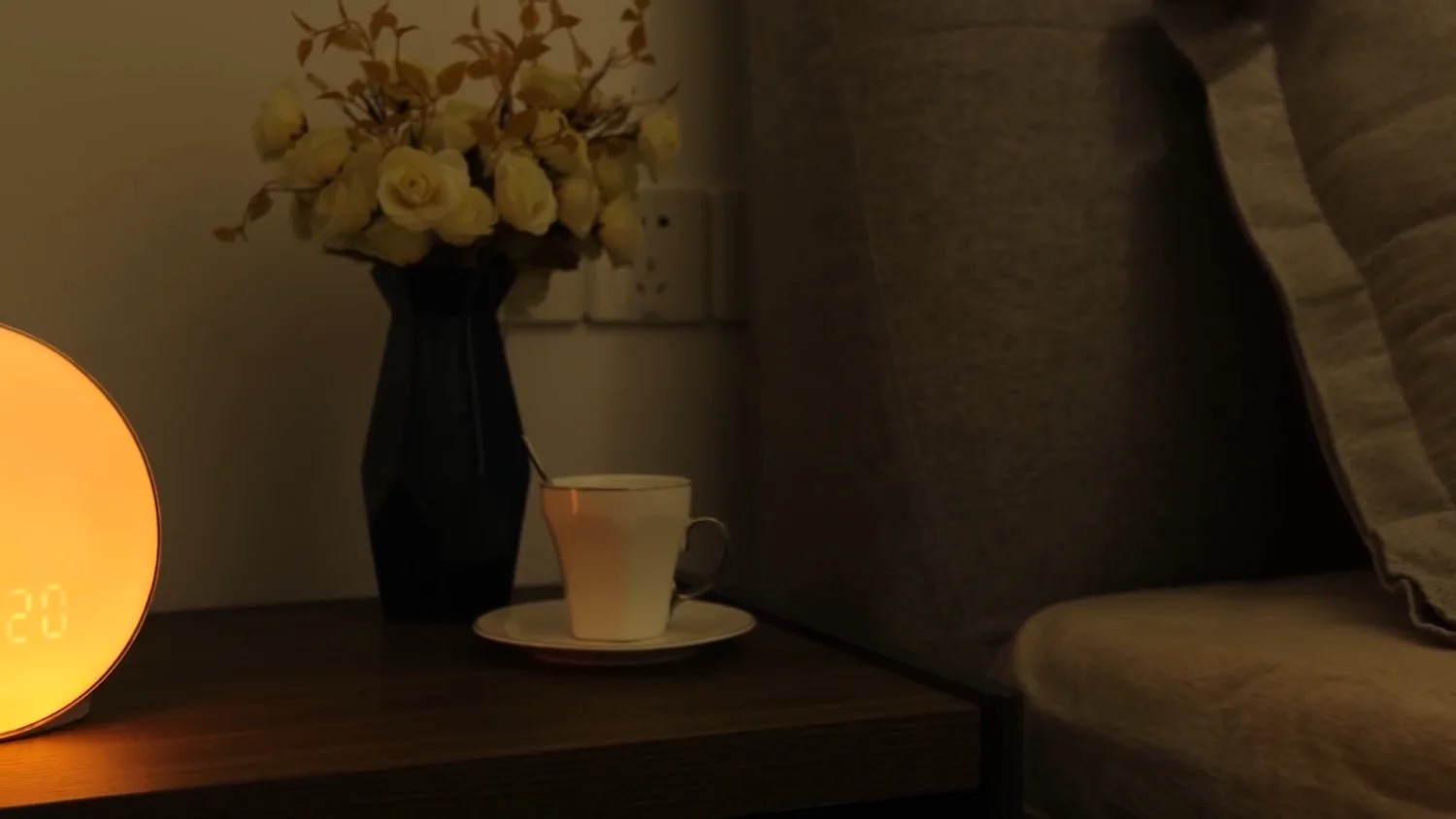
Here is how our clocks look at home. We photograph them on clean backgrounds to show their design, but we also show them in dark rooms. You judge a clock when the lights go out, so that is how we photograph them. See how the numbers glow and how the light warms a dark bedroom.
The full-screen sunrise clock, mid-dawnWooden alarm clock with wireless charging, on a bookshelfThe slim mirror clockWooden digital alarm clock, blackCalendar day clock, 8 inchSunrise clock as a night lightWooden digital alarm clock, whiteSilent analog alarm clock16-inch digital wall clock30-inch giant wall clock
Quality
What we check before a clock leaves us
Every model goes through the same five checks before it ships, and every one of them is done in the conditions the clock will actually live in: a dark bedroom, a wall across a room, a nightstand with one outlet.
1Dark roomThe display is taken down to its lowest setting in a dark room. On the sunrise clocks and the wooden clocks that means all the way to off; on the wall clocks it means the auto-dimmer settling to a level that does not light the room.
2Read from a distanceEach clock is read from the far side of the room it is made for: a wall clock from across a classroom, a bedside clock from a pillow, a calendar clock from a doorway.
3Alarm and snoozeThe alarm is tried at its lowest volume, and the button that stops it has to be found by touch, in the dark, first time.
4Power cutThe plug is pulled, the clock waits a minute, and comes back with the time and every alarm still set.
5Cord and adapterThe cord is long enough to reach a nightstand outlet, and the adapter in the box is the certified one the clock was designed around.
How it is made
From a circuit board to a nightstand
A clock spends most of its life being glanced at, so the design work goes into the few things a glance takes in. On the wooden bedside clocks that is the wood-grain surface: thin enough for the digits to show through clearly, dense enough that the clock looks like a plain block of wood when the display is dimmed. On the sunrise clocks it is the diffuser, which covers the whole front face so the light comes up as a soft wash rather than a bright point.
The digits are drawn to the distance. A wall clock is laid out so the time reads first and the date and temperature read second; a calendar clock spells out the day and the month in full because an abbreviation is one more thing to decode. Buttons are placed where a hand finds them in the dark, and every button on a new model is pressed until it can be worked without looking.
The rest is the unglamorous part: cords long enough to reach an outlet behind a nightstand, a certified adapter in every box, a memory backup that keeps the alarms through a power cut, and a silent sweep hand on the one analog clock in the range, because nobody should have to sleep next to a tick.
Compared
A JALL sunrise clock against the alternatives
Your phone is already on the nightstand, and it works as an alarm. The question is what else it does there: it glows, it notifies, and it is the first thing you look at when it wakes you.
A bedside clock does one job. Here is how a sunrise clock compares with the other things people put beside the bed, from a basic digital alarm to a smart light with a speaker.
JALL sunrise alarm clock
Phone alarm
Basic digital alarm clock
Smart light + speaker
Wakes with light before sound
Yes
No
No
With an app routine
Display can go fully dark
Yes
Face-down, and it still buzzes
Rarely
Depends on the lamp
Works without Wi-Fi or an app
Yes
No
Yes
No
Keeps settings through a power cut
Yes
Yes
Sometimes
Usually
Sleep sounds built in
25 sounds, with a timer
An app, and the phone stays by the bed
No
A subscription, often
Phone can stay out of the bedroom
Yes
No
Yes
No
One purchase, no monthly fee
Yes
Yes
Yes
Sometimes
Price in our range
$29.98 to $45.99
Already owned
Usually less
Usually more
Feature by feature. Where a column says “depends”, it does: those products vary more than ours do.
Certification and compliance
What the marks on the label mean
Several of our clocks contain a radio, and radios in the United States are regulated. Here is what the marks on the label mean and where to find them.
FCC and radio
The models with a Bluetooth speaker, Bluetooth time sync, or an FM receiver are radio-frequency devices. In the United States such devices are required to be authorized under FCC rules (47 CFR part 2) before they can be sold or imported. Depending on the device the procedure is either Certification or a Supplier's Declaration of Conformity, and the required information is printed on the product label, with the full compliance details in the manual.
The adapter
The mains adapter in the box with our sunrise clocks is a certified power adapter. It is the adapter the clock was designed around, and it is the one to use.
Where to look
The FCC information for your exact clock is on the label on the back or the base, and on the compliance page of its manual. If you ever need to quote it, that is the place to read it from.
Who makes this
Who makes JALL clocks
Four teams share the work on every clock, and each owns one set of decisions.
Design
The case, the finish and the size of the digits. Design decides how thick the wood-grain surface on a bedside clock can be before the digits go soft, how wide the digits on a wall clock have to be for the room it is meant for, and where the buttons sit so they can be found in the dark.
Light and sound
How the dawn ramps and what the clock sounds like. This team sets the curve from the first glow to full brightness across the 10 to 60 minute range, and chose the 25 sleep sounds from many more that were tried and dropped.
Quality
What ships and what does not. If a display does not dim far enough, a button has a rough edge, or a clock forgets its alarms after a power cut, it does not go out.
The catalogue
Which clocks appear on this site, in which colours and sizes, at what price. This team keeps the range on these pages current and answers the mail.
The JALL story
Why we make clocks
Most of us keep a phone on the nightstand. It is the last thing we look at before sleep and the first thing we reach for when the alarm goes off, and it is a poor clock. It is built to get your attention and keep it. It lights up with a late email, it buzzes with a message from someone you have not spoken to in years, and if you pick it up at three in the morning to see the time you are suddenly reading headlines with the screen an inch from your face. It is also never quite where you left it.
We started JALL because a bedroom deserves a better clock than that. A clock should tell you the time and do nothing else. It should not ask you to check anything, it should not glow unless you want it to, and it should stay exactly where you put it.
Light before sound
Nobody enjoys waking to a loud noise in a dark room. For most of history people woke because the sun came up, and that is the idea behind our sunrise alarm clocks.
Instead of a jolt, the front face of the clock begins to brighten before the alarm time. You choose how long the dawn takes, from 10 to 60 minutes, and by the time the sound plays the room is already light.
Waking to a bright room is a gentler way to start the day than waking to a sudden sound in the dark.
At the other end of the day the same clocks play 25 sleep sounds, white noise and nature tracks, on a timer from 10 to 480 minutes, and the display dims all the way to off so the room stays dark. Some models add an FM radio and a Bluetooth speaker. None of them needs an app or a Wi-Fi network: everything is set with the buttons on the clock, and the settings survive a power cut.
Reading the time from across the room
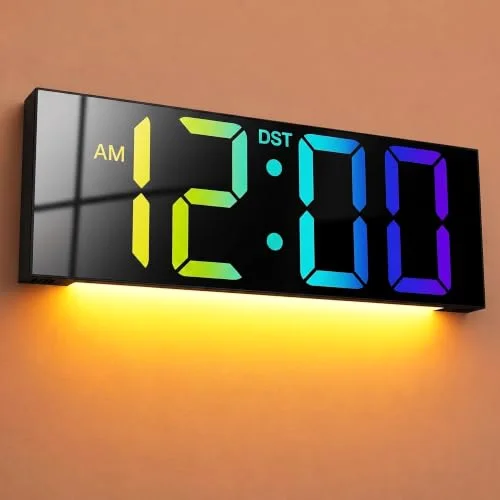
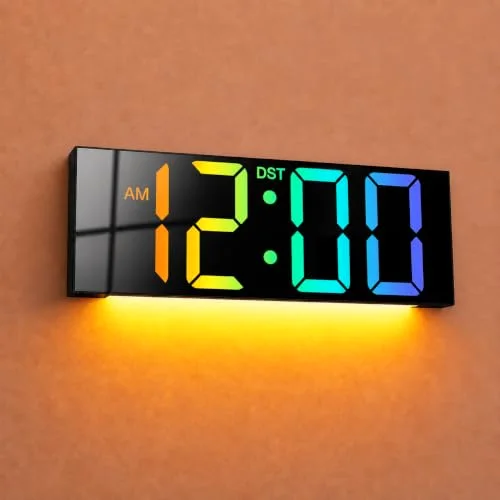
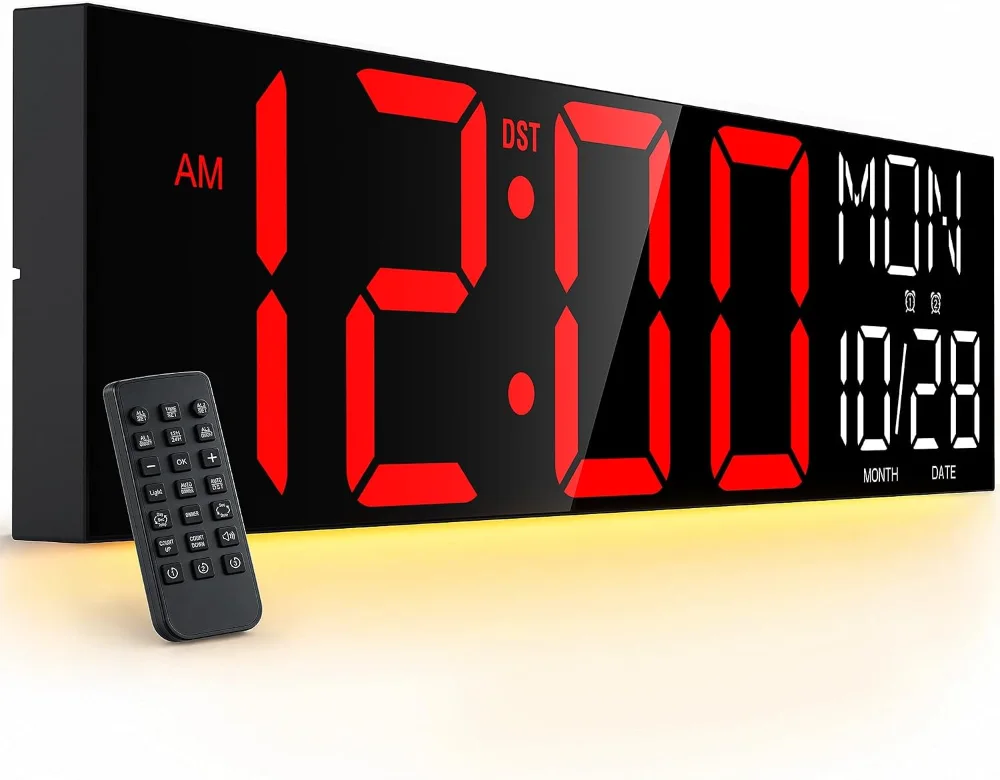
There are rooms where the time has to be read from a distance: a kitchen with your hands in flour, a gym, a classroom with thirty people in it. For those we make large digital wall clocks, from 8 inches across to 30.
The digits are big and plain, with the date, the day of the week and the room temperature underneath. Most models dim themselves to the light in the room and change for daylight saving on their own, and most come with a remote, so a clock eight feet up a wall can be set from the floor. They hang in kitchens, gyms, classrooms and offices, and they do one job for everyone in the room at once.
Sixteen inches is the size most people choose for a living room or a classroom; 22 and 30 inches are for halls, gyms and warehouses, and the 8 to 12 inch clocks suit a hallway or a home office. There is one battery model for a wall with no outlet, which runs 8 to 14 months on four AA cells, and about half the range has a countdown timer, which matters as much in a classroom as it does in a gym.
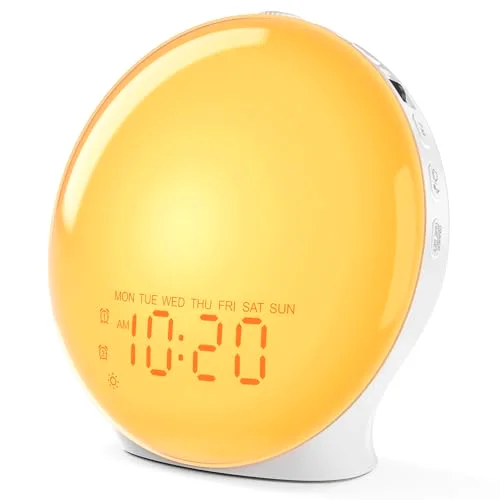
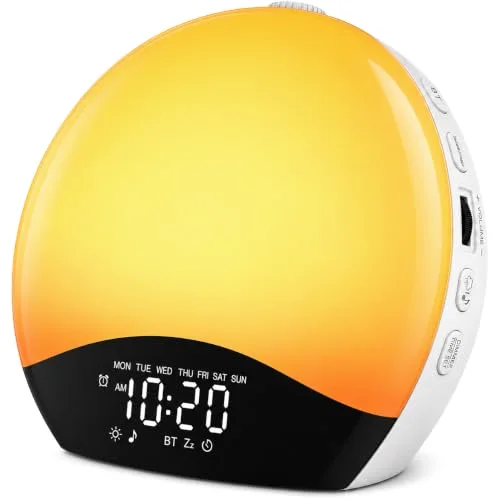
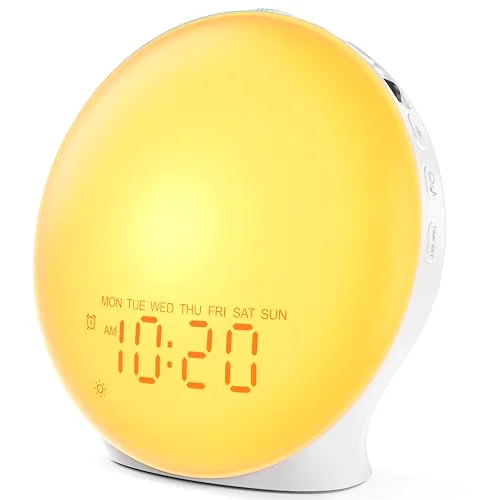
The full-screen sunrise model. The whole front face is the lamp; the digits sit inside it.
The rest of the range
Not every nightstand wants a lamp. For the bedside we make wooden digital clocks with digits that show through the wood-grain surface, three alarms and weekday and weekend settings, and a slim mirror-front clock for a narrow table. The same line has an alarm clock with an FM radio, eight white noises and an eight-colour night light, and two wooden models that charge a phone laid on top, which keeps the phone off the pillow without putting it out of reach.
For an older parent, or anyone for whom a glance should be enough, we make calendar day clocks that write the day of the week, the month and the date out in full, in large type, with no abbreviations to decode. And for a suitcase or a spare room there is a small analog alarm with a sweep second hand that does not tick and a night light on the top button.
What we ask of every clock
Four things, and they are the same for the whole range. Light before sound: on the sunrise clocks the light does the waking, and on the others the display is the point, not a buzzer. Dark when you want dark: every display dims, and the bedside clocks go to off. Readable from where you are: digits sized for the distance the clock is meant for. And no app: buttons on the clock, a memory that keeps the settings, nothing to pair unless you want the speaker.
We hold to those four because they are what people notice after the first week. A clock is not a purchase anyone thinks about twice; it is something you live next to for years, and the small decisions, how far the display dims, how long the cord is, how a button feels at six in the morning, are the whole product. That is the standard every JALL clock is built to, whether it costs fifteen dollars or a hundred.
Line
What it is for
Sizes and options
Clocks in it
Sunrise alarm clocks
The light comes up first, over ten to sixty minutes, and the sound only after.
One size, 11 finishes
17
Digital wall clocks
From eight inches for a hallway to thirty for a gym or a classroom.
8 to 30 inches, 19 finishes
62
Bedside alarm clocks
Wood-grain cases with digits that show through the surface, a mirror-front slim model, and one with FM radio and a night light.
One size, 10 finishes
16
Day clocks for seniors
A calendar clock writes the day of the week and the month in full words, in large type, and keeps them there.
7 to 12 inches, 6 finishes
11
Analog alarm clocks
A four-inch clock with a sweep second hand that does not tick and a night light on the top button.
4 inch, 7 finishes
10
The range as it stands in our update of 21 August 2026: 118 clocks in 28 model families.
Where to start
If you sleep in a dark room and hate the way an alarm sounds, start with a sunrise clock and set the dawn to 30 minutes. If you need the time from across a room, pick a wall clock by the distance to the farthest chair rather than by the wall it hangs on. If you are choosing for a parent, a calendar clock of 8 inches or larger, facing the bed or the chair they sit in most. And if all you want is a quiet clock that needs no outlet, the analog one is the answer.
The rest of this page has the range shelf by shelf, with prices, colours and what people who bought each clock said about it. We keep it current, and we would rather you found the right clock the first time than came back for a second one.
What people say
Reviews from people who bought one
These are reviews from people who bought our clocks, quoted as they wrote them, with the three- and four-star ones left in. Each one links to the clock it is about.
4.44average across 26 rated model families, from 150,035 customer ratings. The three- and four-star reviews below are here on purpose.
Pat on the back for me for buying this
I really like this alarm clock and I wish I had thought to buy something like this sooner. I’ve been using it for about 3 weeks now and it’s so much nicer to essentially feel like I’m waking up on my own (at the same time every morning, suspiciously), rather than being jolted awake by the sound from my phone. Also, the instructions on getting it set up are crystal clear, I LOVE THAT!
The price was right to be able to buy one for each kid, but I'm disappointed to find out that when you shut off the alarm sound the light also goes off. The ideal situation for us would be that the alarm sound gets shut off but the bright light stays on.
Not a particularly loud alarm, but a beautiful decorative clock with some useful displays..
While it looks lovely in pictures, this alarm clock is even more beautiful outside the box. It's small, but it's got a shape and texture that makes it look very elegant. This display panel is invisible, so the numbers look like they are right on the wood. I don't know how to describe it, but it doesn't look electronic -- especially when it's not turned on. It's the most beautiful clock I've ever owned.
The ability to dim or brighten the display, monitor the relative humidity or temperature, set THREE separate alarms (with volume control) would all be worth the money, but the cherry on top is the wireless charger. Other alarm clocks I’ve purchased required the phone to be placed just so in order for the wireless charger to work, but with THIS clock, I just lay the phone down, and it charges - quickly. No need to be precise.
Love how slim it is, and the different levels for light. Also happy with the alarm options, I sleep in a little on days off but still want an alarm, and this allows for Mon-Fri alarms, daily alarms, and weekend alarms, so I can set it and forget it. (For schedules that change or days off during the week it doesn't have a setting to change those unfortunately, but in Mon-Fri cases its amazing)
Great Clock with Many Helpful Features and Excellent Customer Service
I bought this clock to hang over my workbench so that I could see the time from any angle and across the room. I like the various features, but I mostly use the white-colored numbers. It's very easy to adjust the date/time and settings. The auto dimming is also a nice feature so that it's not glaringly bright in the evening. I don't use the alarm clock but have noticed when I turn it off, sometimes it still sets itself. I turned the volume down and don't ever think about the alarm.
Using this in my classroom. I love that once I’ve set it it stays set! The custodian ALWAYS unplugs my clock but it goes right back to the correct time once I plug it in. I love all the color choices it allows and love that the remote is user friendly.
This clock is so easy to set up. It’s has very clear numbers and letters. My 96 year old mother loves it. She says it helps so much with knowing which day it is. All her days are the same so it’s easy to lose track. She says it helps with taking her pills as well. The clock has a sound alert to remind you to take your pills, or anything you need a daily reminder. It has many helpful functions. I only use the basics for my mom at this time.
It is a cute little clock for a nightstand. We use it in a spare bedroom so we don't use the alarm etc. but it was easy to set & I like the compact size & the clock face. I would recommend it.
We design clocks to make your daily routines a little quieter. In these articles, we share practical guides to help you set up your space. Learn how gradual light can wake you up naturally, how to choose a clear calendar clock for someone living with dementia, and how to pick the right digital clock size for your room.
Does a sunrise alarm clock work if I sleep with my eyes closed?
Yes. Our eyelids let light through. The light brightens gradually over 10 to 60 minutes. For most people, a brightened room is noticeable even while asleep. This prepares you to wake up. For most people the light does most of the work, and the alarm sound is there for the mornings it does not.
Can the display be turned fully off at night?
Yes, you can sleep in complete darkness. The display on our sunrise alarm clocks dims completely to off. Our wooden bedside clocks automatically dim based on the time of day to keep your room dark. The larger digital LED wall clocks adjust their brightness automatically depending on the ambient light in the room.
Do I need an app or Wi-Fi?
You do not need any phone apps, accounts, or wireless internet to use our clocks. Every setting is controlled directly by the physical buttons on the device. A few models feature Bluetooth, but this is entirely optional. It is only used to play music through the speaker or to sync the time.
What happens in a power cut?
Your time and alarm settings are safe. A memory backup keeps this information secure on our sunrise clocks, calendar clocks, and most wall clocks. However, the clock will not display the time, shine light, or sound an alarm while the power is out, unless you have a model that specifies battery operation.
Is a white noise machine safe in a child's room?
We follow the guidance of the American Academy of Pediatrics on this. Some sleep machines can produce hazardous noise levels. We recommend that you place the clock as far from your child's head as possible. Keep the volume set to a quiet level, and only use the sound for a short time.
Which size wall clock for a classroom?
For a standard classroom, we recommend our 16 to 22 inch digital clocks. These sizes are easy to read from the back row. For larger spaces like a gym or a main hall, the 30 inch model is best. Our detailed clock sizing article explains how to choose based on viewing distance and digit height.
Nothing on this page is medical advice, and nothing here is a claim that any particular product treats a sleep problem. A sunrise alarm clock changes how a morning starts; it does not diagnose or treat anything. If you sleep badly for weeks, or you are choosing a clock for a child’s room or for someone with dementia, the sources below are where we would start reading, and a healthcare provider is who we would ask.
Start tomorrow with JALL
Pick the clock for the room, set it once, and let the light do the waking. Everything in the range is on the shelves above, current and in stock; the small print at the foot of the page covers the rest.