How a sunrise alarm clock wakes you, and how to set one up
Why light before sound works, how long a dawn should take, where the clock should sit, and the settings most people never touch.
What a sunrise alarm clock actually does
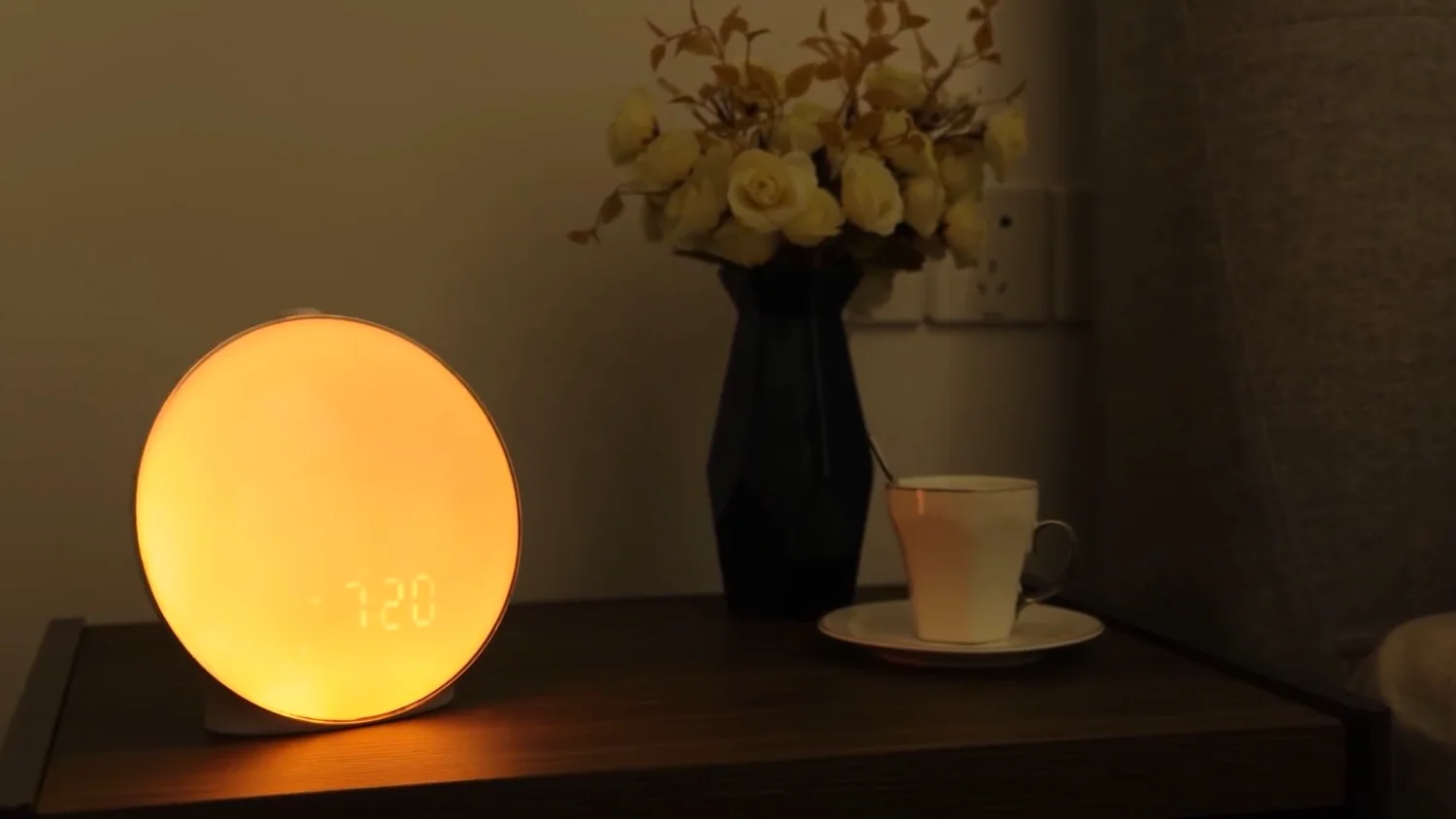
Most alarms are sound-first. They wait until the exact minute you set, then they make a loud noise. A sunrise alarm clock works in reverse. It is a light-first device.
It starts working before your set wake-up time. The face of the clock contains light-emitting diodes, or LEDs. At the start of your chosen dawn cycle, these LEDs turn on at their lowest possible setting. Slowly, over the course of many minutes, the brightness increases.
The light shifts from a warm, low glow to a bright, room-filling light. By the time your alarm time actually arrives, the clock is shining at full strength. Only then does a gentle sound play. There is no mystery to how this works.
It is a simple combination of a digital timer and a dimmable light source. JALL clocks do not use complex wireless connections. They do not require a smartphone app or a home Wi-Fi network. They operate entirely on their own, using internal components to manage the timing and the light levels.
This simplicity is intentional. A bedroom should be a place of rest, not another room filled with screens and signal connections. The clock sits on your table, keeps time, and turns on its light when it is programmed to do so. It is a mechanical transition from dark to light, built to mimic the natural pattern of the morning sun.
The clock does one job, and it does it using local, reliable hardware. This design keeps your morning routine independent of your phone, helping you start the day without immediately reaching for a screen.
The body clock and the power of light
To understand why this method is useful, you have to look at how our bodies respond to light. Human biology is deeply tied to the daily cycle of the sun. Our internal clocks, or circadian rhythms, govern when we feel alert and when we feel tired. According to the National Institute of General Medical Sciences, light and dark have the biggest influence on circadian rhythms.
When your eyes detect light, even through closed eyelids, it signals to your brain that the day has begun. Darkness signals the opposite. This explains why artificial light at night can cause problems. The National Institute of General Medical Sciences also notes that light from electronic devices at night can confuse biological clocks.
If you have a bright screen or a clock with glowing blue numbers next to your bed, your brain can receive mixed signals. A lit display at 2 a.m. works against your natural sleep cycle. It can make your body think it is still daytime and make it harder to settle. That is why a good alarm clock must be able to go completely dark.
If the clock itself is casting a glow into the room all night, it defeats the purpose of creating a natural sleep environment. You want darkness during the night, followed by a clean, gradual introduction of light in the morning. This contrast is what helps your biological clock stay aligned with the actual time of day.
Waking through closed eyelids
Many people wonder how a light can wake them up if their eyes are closed. The answer lies in the structure of our eyelids. Human skin is thin, and the eyelids are no exception. They do not block out light completely.
If you close your eyes in a bright room, you can still perceive the light. You can tell if someone turns a lamp on or off. When you sleep in a dark room, your pupils dilate to let in as much light as possible. As the sunrise clock begins to brighten, the light passes through your closed eyelids.
Your brain processes this change in light levels. You do not necessarily wake up instantly. Instead, your brain begins to shift you out of the deepest stages of sleep. You move gradually into lighter sleep stages. By the time the sound finally plays, your body is already prepared to wake up.
The light does the actual work of bringing you out of deep sleep, while the sound is just a backstop to make sure you get out of bed.
This is very different from waking up to a sudden sound in a pitch-black room. When a phone alarm goes off in the dark, your brain is often caught in a deep sleep stage. That is where the heavy, groggy feeling after getting out of bed comes from. By letting light do the heavy lifting, you ease the transition from sleep to wakefulness. You wake up feeling more put together, rather than startled. It is a cue the body already knows.
Choosing your dawn length
Our sunrise clocks allow you to adjust the dawn length from 10 to 60 minutes. This setting determines how long the light takes to reach full brightness. Choosing the right duration depends on how you sleep. There is no single correct setting for everyone.
You have to find what works for your personal sleep patterns. If you are a very light sleeper, you might find that you wake up the moment the light turns on, even at its lowest level. If your dawn is set to 60 minutes, you might wake up an hour before your scheduled time and find it hard to get back to sleep. For light sleepers, a shorter dawn of 10, 15, or 20 minutes is often best.
This gives you a quick transition without waking you up too early. On the other hand, if you are a very heavy sleeper, you might sleep right through the first 30 minutes of light. You might need a longer cycle, such as 45 or 60 minutes, to give your brain enough time to register the change in the room. The gradual increase over an hour allows your body to slowly climb out of deep sleep.
When you first set up your clock, starting with a 30-minute dawn is a sensible middle ground. You can then adjust the time up or down over the next few days based on how you react. Pay attention to when you actually open your eyes. If you consistently wake up 20 minutes before the sound plays, and you feel ready to get up, your setting is likely correct.
If you do not wake up until the sound has been playing for several minutes, you may need a longer dawn or a higher maximum brightness level.
| Dawn length | Who it suits | What to expect |
|---|---|---|
| 10 minutes | Someone who already wakes easily and wants a softer edge | The light is at full brightness for only a short spell before the sound |
| 20 to 30 minutes | Most people; the setting we would start with | The room is visibly light for the last quarter hour of sleep |
| 45 to 60 minutes | Heavy sleepers, dark winter mornings, shift workers | A long, slow lift; the alarm sound often lands on someone already half awake |
Finding the right spot for your clock
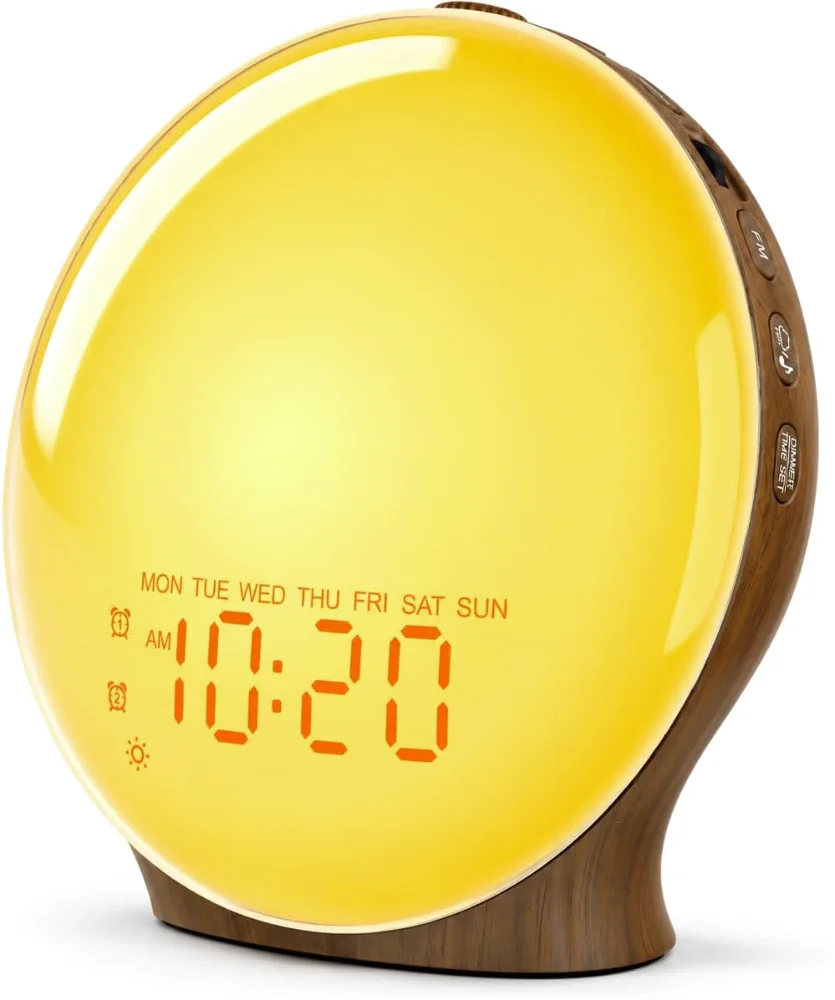
The physical placement of your sunrise clock is just as important as the settings you choose. This is not a standard alarm clock that can sit on a shelf across the room or down on the floor. Because it relies on light to wake you, the light must actually reach your eyes. The ideal position is on a nightstand directly beside your bed, at about the same height as your pillow.
The face of the clock should be angled toward your face. If the clock is placed too low, the light will hit the side of your mattress or your blankets, casting a shadow over your face. If it is placed too high, the light might shine over your head. You also want to make sure there are no obstacles between you and the clock.
Do not place a lamp, a stack of books, a water glass, or a box of tissues in front of the clock face. Even a small obstruction can block a significant amount of the light, reducing its effectiveness. If you sleep with a partner and you both want to wake up to the light, you may need to experiment with the angle, or you might need two separate clocks. If you sleep on your side, face the clock.
If you tend to turn away from the nightstand during the night, you might need to set the light level slightly brighter to ensure it still reaches you. The goal is to create a wash of light that covers your sleeping area, mimicking the natural way sunlight fills a bedroom. Take a moment to look at your nightstand from the perspective of your pillow. Lie down and see if you have a clear line of sight to the spot where the clock will sit.
Selecting the right wake-up sound
The sound on a sunrise clock is not meant to startle you. It is a safety net. It is there to make sure you do not sleep through the light if you are unusually tired. Because the light has already started the waking process, the sound can be much quieter and gentler than a standard alarm.
Our clocks offer a variety of natural sounds and white noise options. Selecting a quiet, natural sound makes the final stage of waking much more pleasant. Look for options like soft forest birds, gentle waves, or light chimes. These sounds start quietly and match the peaceful atmosphere created by the light.
Avoid loud, repetitive beeps if you can. If you have set the clock up correctly, you will often find that you wake up a few minutes before the sound even begins. In those cases, the sound acts as a gentle confirmation that it is time to get up, rather than a shocking interruption. If you prefer, some models also include an FM radio or a Bluetooth speaker, allowing you to wake up to a favorite station or a specific morning playlist.
Whichever option you choose, keep the volume at a moderate level. The purpose of the sound is to nudge you over the finish line of waking up, not to shock your nervous system. If you find yourself flinching when the sound starts, the volume is too high, or you have chosen a sound that is too aggressive. Lower the volume and try a softer option. The transition from sleep to waking should be as smooth and quiet as possible.
Bedtime sounds and safety for children
A sunrise clock is also useful in the evening. Many people find it hard to wind down in a dark, silent room. The transition from a busy day to sleep can be difficult. JALL clocks feature 25 sleep sounds, including white noise and nature tracks, along with a sleep timer that can be set from 10 to 480 minutes.
You can set the light to one of the 17 light modes, such as a warm orange or amber glow, and let it slowly fade away as the sleep sounds play. This helps create a relaxing bedtime routine. However, if you are using these features in a child's bedroom, you must be careful with the sound levels. The American Academy of Pediatrics says some infant sleep machines can produce hazardous noise levels.
If you use a sound machine or an alarm clock with sleep sounds in a baby's or child's room, the American Academy of Pediatrics recommends that it should be placed as far from the baby's head as possible, kept quiet, and set to run for a short time only. Do not place the clock directly next to a crib or a toddler's bed if you are playing sleep sounds. Instead, place it across the room on a high shelf. Keep the volume low, well below the maximum setting.
Use the sleep timer to ensure the sound turns off after 30 or 60 minutes, rather than playing all night long. That keeps the sound where it belongs: quiet, distant and brief.
The hidden settings you should use
Sunrise alarm clocks have several features that people often overlook during the initial setup. Taking a few minutes to explore these settings can make a big difference in how you use the clock. One of the most important features is the ability to dim the display completely to off. Many digital clocks have numbers that glow brightly all night, which can disturb your sleep.
By turning the display completely off, you keep your bedroom dark. You can still see the time when you press a button, but otherwise, the room remains pitch black until the morning sunrise begins. Another useful feature is the alarm scheduling. Our clocks offer weekday, weekend, and daily alarm modes.
This means you do not have to worry about turning your alarm off on Friday night and remembering to turn it back on Sunday evening. You can set your weekday alarm to go off Monday through Friday, and either turn it off for the weekend or set a later time for Saturday and Sunday. The clock also features a nine-minute snooze button. While we recommend trying to get up with the light, there are days when you simply need a few more minutes.
The snooze function gives you a brief rest without letting you fall back into a deep sleep cycle. Finally, our clocks include a memory backup system. If there is a power cut during the night, your settings and alarm times are saved. Because there is no app or Wi-Fi needed, the clock is reliable and simple to maintain. You do not have to worry about a lost internet connection or an update failing in the middle of the night.
| Setting | Where it lives on our clocks | What we suggest |
|---|---|---|
| Display brightness | Dimmer, all the way to off | Off, or the lowest step, for the night; the light itself is what wakes you |
| Sunrise duration | 10 to 60 minutes | Start at 30 |
| Alarm sound | Nature sounds, tones, radio on the FM models | A quiet one; if the light has done its job the sound is a backstop |
| Snooze | Nine minutes | Once is fine; twice means the alarm is set too early |
| Sleep sounds | 25 sounds, 10 to 480 minute timer | A timer, not all night, and low |
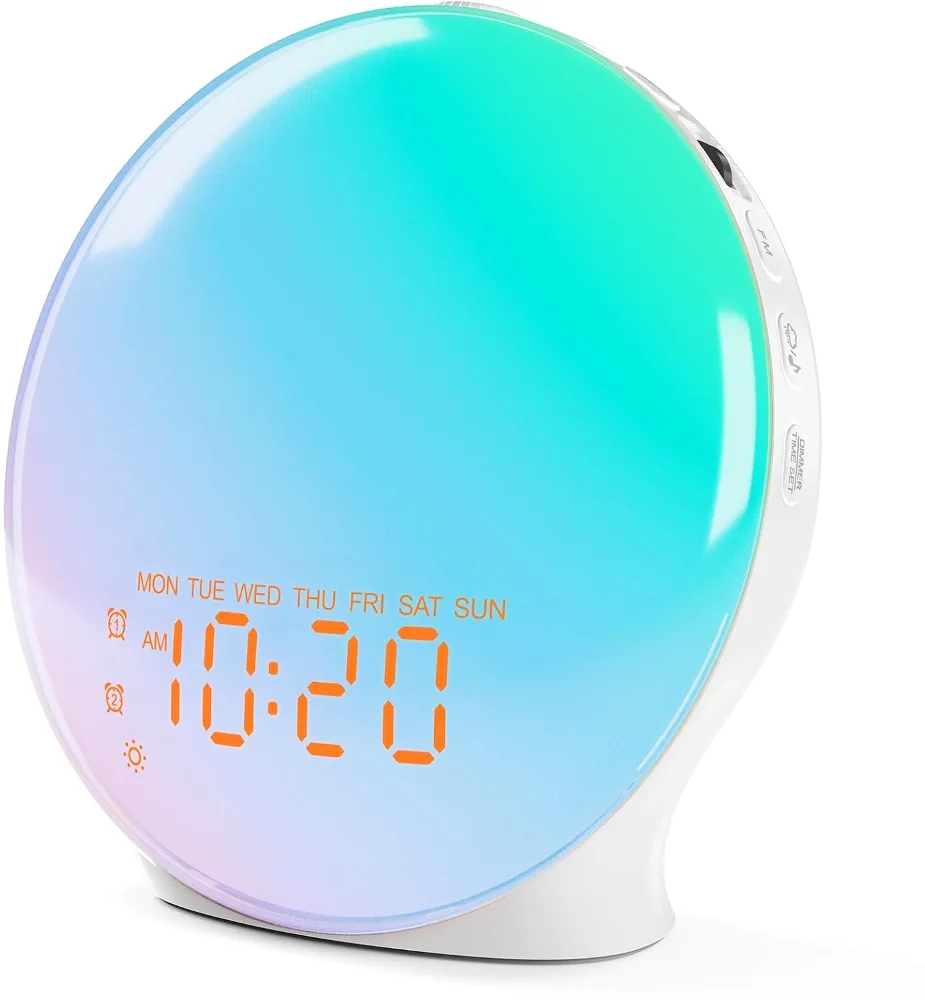
| Night light | Up to 17 modes | A warm colour, dim, and only when you need to see |
Your first week with a sunrise clock
Transitioning to a sunrise alarm clock takes some time. Your body is likely used to the sudden shock of a phone alarm, and it may not trust the light at first. It is important to approach the first week with patience. Do not immediately disable your old alarm.
For the first three days, keep your phone or old alarm set as a backup. Set it to go off about five minutes after the sunrise clock's sound is scheduled to play. This removes the anxiety of worrying whether the light will wake you up. You can sleep easily knowing you will not be late for work.
During these first few days, simply observe how your body reacts. Do you wake up when the light is dim, or do you sleep until the sound plays? By the fourth day, you can begin to adjust the settings. If you find that the light wakes you up too early and you feel tired, try shortening the dawn length from 30 minutes to 20 or 15 minutes.
If you are sleeping through the light entirely and only waking up when the sound starts, try lengthening the dawn to 45 or 60 minutes, or increase the maximum brightness level of the light. By the end of the week, you should have a better understanding of your personal light sensitivity. You can then turn off your backup phone alarm and rely entirely on the sunrise clock. Give yourself time to adapt to the change.
Sunrise clocks in our range
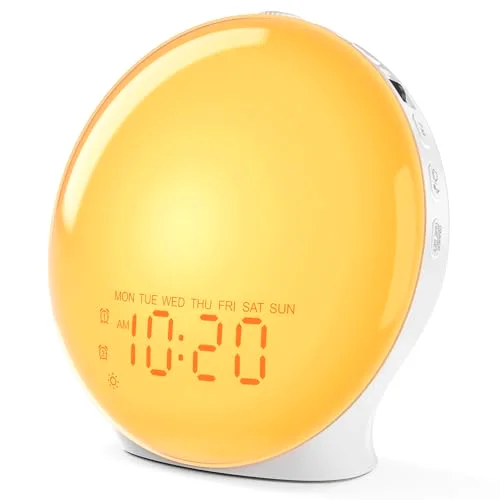
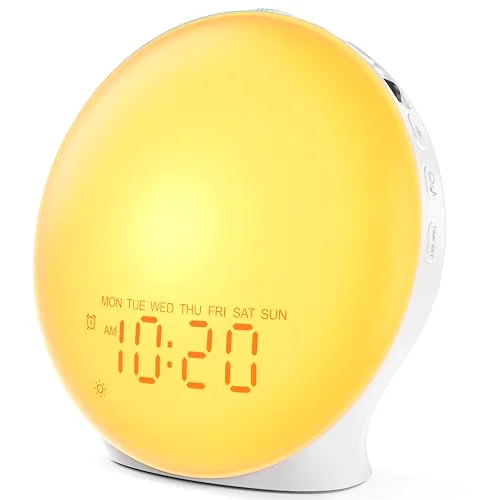
Two model lines. Both run the dawn from 10 to 60 minutes; the FM line adds a radio and the K6 line a Bluetooth speaker.
What a sunrise clock will not fix
While a sunrise alarm clock is a helpful tool, it is not a magic solution for poor sleep habits. It cannot make up for a lack of sleep or an irregular schedule. To get the most benefit from any sleep device, you must look at your overall routine. The CDC lists several habits that can improve your sleep.
These include going to bed and getting up at the same time every day, including on weekends. The CDC also recommends keeping your bedroom quiet, dark, relaxing, and at a comfortable, cool temperature. Another key recommendation is to turn off electronic devices, such as TVs, computers, and smart phones, at least 30 minutes before bedtime. Adults should aim to get seven or more hours of sleep each night.
If you are only sleeping four or five hours a night, or if your bedtime changes constantly, a sunrise clock will not prevent you from feeling tired. Consistent sleep and wake times are far more important than any device you place on your nightstand. A clock is designed to assist a healthy routine, not replace it. Additionally, it is important to recognize when sleep issues require professional help.
A sunrise clock is not a medical device. If you struggle with severe insomnia, daytime fatigue, or other sleep problems that persist for weeks, you should talk to a healthcare provider. They can help you identify the underlying causes of your sleep difficulties and recommend appropriate treatments. Use the clock as a supportive tool alongside healthy daily habits.
Defining a good morning
A good morning is often misunderstood. Many people think a perfect morning involves waking up with a sudden burst of energy, ready to run a marathon. In reality, a good morning is much quieter. It is defined by the absence of stress and panic.
When you wake up to a sudden, loud alarm, you are jolted into the day. It can leave you feeling hurried before you have even got out of bed. In contrast, waking up to a gradual light feels natural. It is similar to the way you might wake up on a camping trip or on a holiday when you do not have to set an alarm.
You open your eyes to a bright room. Your body has had time to transition out of sleep naturally. You might lie in bed for a minute or two, letting your mind clear, without the urge to immediately check your phone. This calm transition sets a different tone for the rest of your day.
You are not starting from a place of exhaustion and shock. Instead, you are stepping into your morning with a quiet, steady focus. By changing the way you wake up, you change the way you approach your entire day. A sunrise clock like those made by JALL is not about changing who you are. It is simply about making the first twenty minutes of your day a little more peaceful.
This article is general information about light, sleep habits and alarm clocks. It is not medical advice, and it is not a claim about any particular product treating a sleep problem. If you sleep badly for weeks, talk to a healthcare provider.